
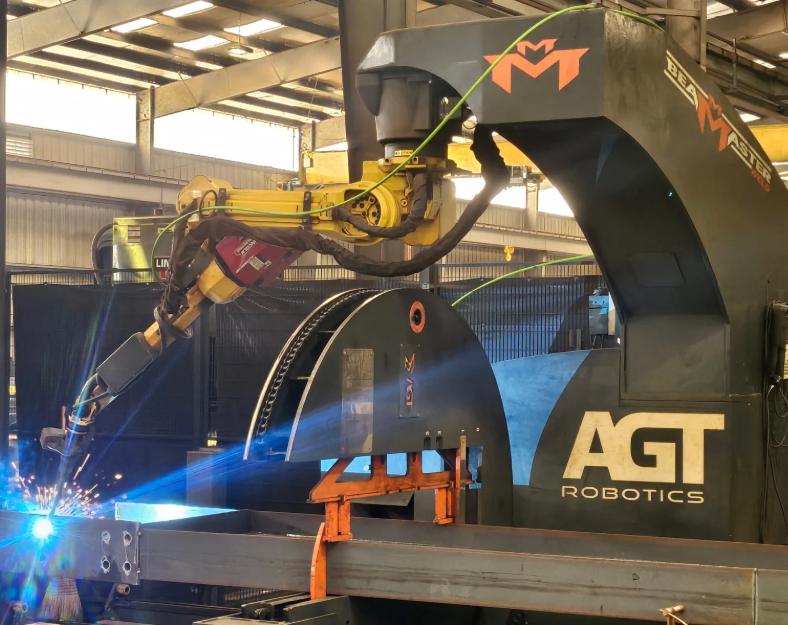
Why Robotics Matters in PEMB Fabrication—The EcoSteel Approach
𝗜𝗻𝘁𝗿𝗼𝗱𝘂𝗰𝘁𝗶𝗼𝗻:
In today’s fast-paced world, where speed, accuracy, and sustainability are the keys to success in construction, robotics has stepped in as a true game-changer—particularly in the field of Pre-Engineered Metal Buildings (PEMB). At EcoSteel, we’re not just looking ahead; we’re actively shaping the future. By incorporating state-of-the-art robotic technologies into our fabrication processes, we’re transforming the way steel structures are designed, built, and delivered.
With tools like advanced laser cutters, CNC automation, robotic welding systems, and AI-driven quality control, EcoSteel is raising the bar for the industry. Our robotic fabrication not only boosts structural integrity and design flexibility but also cuts down on waste, labor inefficiencies, and production delays.
This article delves into the vital role that robotics play in PEMB fabrication and how EcoSteel harnesses this innovation to provide smarter, stronger, and faster building solutions.

1. Understanding Robotics in PEMB Fabrication

They are structural systems built off-site in controlled environments before being shipped for assembly. Additionally, they known for their cost-effectiveness, quick construction times, and design flexibility. These qualities make them a popular choice for commercial, industrial, and institutional projects. Moreover, every building is built from precision-made steel components, designed to fit together perfectly on-site.
In the realm of steel fabrication, robotics refers to the use of programmable machines. Such as robotic welders, CNC laser cutters, and automated material handlers—to carry out repetitive and precise tasks that were once done by hand. Automation enhances consistency, safety, and speed, especially when paired with software tools like CAD and BIM.
Traditionally, the PEMB industry relied heavily on skilled labor, but it has seen a significant transformation. Moreover, today’s fabrication processes combine human skill with robotics. Moreover, this approach helps companies like EcoSteel reduce lead times, improve accuracy, and meet the growing demands of large-scale, high-performance construction.

2. Why Robotics Matter: Key Industry Challenges Solved

In the world of traditional steel fabrication, even the smallest mistakes in cutting, welding, or alignment can lead to expensive rework and structural issues. Robotics steps in to significantly reduce these risks by performing tasks with incredible accuracy and consistency. At EcoSteel, our robotic laser cutters and CNC systems guarantee that every steel component is crafted to match digital design specifications perfectly. However, this kind of precision not only boosts structural integrity but also makes the entire construction process smoother.
Tackling Labor Shortages and Rising Construction Costs. The construction industry is grappling with serious hortages and increasing wage demands. Robotics offers a scalable solution by automating repetitive, high-skill tasks without sacrificing quality. By incorporating robotic welding, cutting, and assembly systems, EcoSteel lessens its reliance on manual labor while ramping up production capacity, enabling us to complete more projects on time and within budget.
In today’s fast-paced construction landscape, time is of the essence. Robotics speeds up fabrication cycles by working continuously with minimal downtime. Finally, EcoSteel’s robotic systems increase production speed without compromising on quality. This ensures faster project completion while maintaining exceptional precision and craftsmanship.
3. The EcoSteel Difference: Robotics at Work
At EcoSteel, robotics isn’t an add-on—it’s a core part of how we work. Our fabrication process begins with fiber laser cutting. In addition, these machines slice through steel with extreme accuracy and minimal waste. This precision ensures perfectly aligned components and reduces the need for field adjustments.
We also use CNC-guided and robotic systems to create insulated panel assemblies. These machines handle cutting, and shaping with unmatched consistency. The result is thermally efficient panels that arrive on-site ready for immediate installation. Our robotic welding and assembly systems form durable connections while reducing safety risks and manual labor exposure.
But our innovation doesn’t stop at the shop floor. It starts at the drawing board. The construction industry has long relied on blueprints and rebar, but that is changing. Machines now help conceptualize structures just as much as they help fabricate them.
We begin many projects with a blend of architectural intuition and AI-powered design tools. Furthermore, these tools use machine-generated prompts to speed up massing studies, and early-stage ideation. This approach doesn’t replace our architects or engineers. Instead, it enhances their creativity and accelerates the entire design workflow.
Once a concept is approved, our digital-to-fabrication workflow activates a tightly integrated network of robotic systems. Laser cutters, CNC-controlled panel lines, and automated welders all receive direct data from our BIM and CAD models. However, this creates a seamless transformation of digital vision into real-world steel—with millimeter-level accuracy, reduced waste, and faster delivery timelines.
4. Benefits of Robotic Fabrication at EcoSteel

Robotics plays a pivotal role in EcoSteel’s fabrication process and delivers measurable benefits at every stage of Pre-Engineered Metal Building (PEMB) production. Robotic systems improve precision by reducing human error in cutting, welding, and assembly, ensuring components fit accurately and perform reliably under stress.
Automation also accelerates project timelines. Steel elements can fabricated, inspected, and delivered far faster than with traditional methods, a major advantage for clients working under tight schedules. In addition, precise laser cutting and optimized nesting reduce material waste, supporting a more sustainable production cycle. Furthermore, robotics also enhance workplace safety by taking over repetitive or hazardous tasks such as heavy lifting, plasma cutting, and welding. Together, these advantages make EcoSteel a leader in efficient, safe, and sustainable PEMB delivery.
5. Real‑World Applications and Project Impact
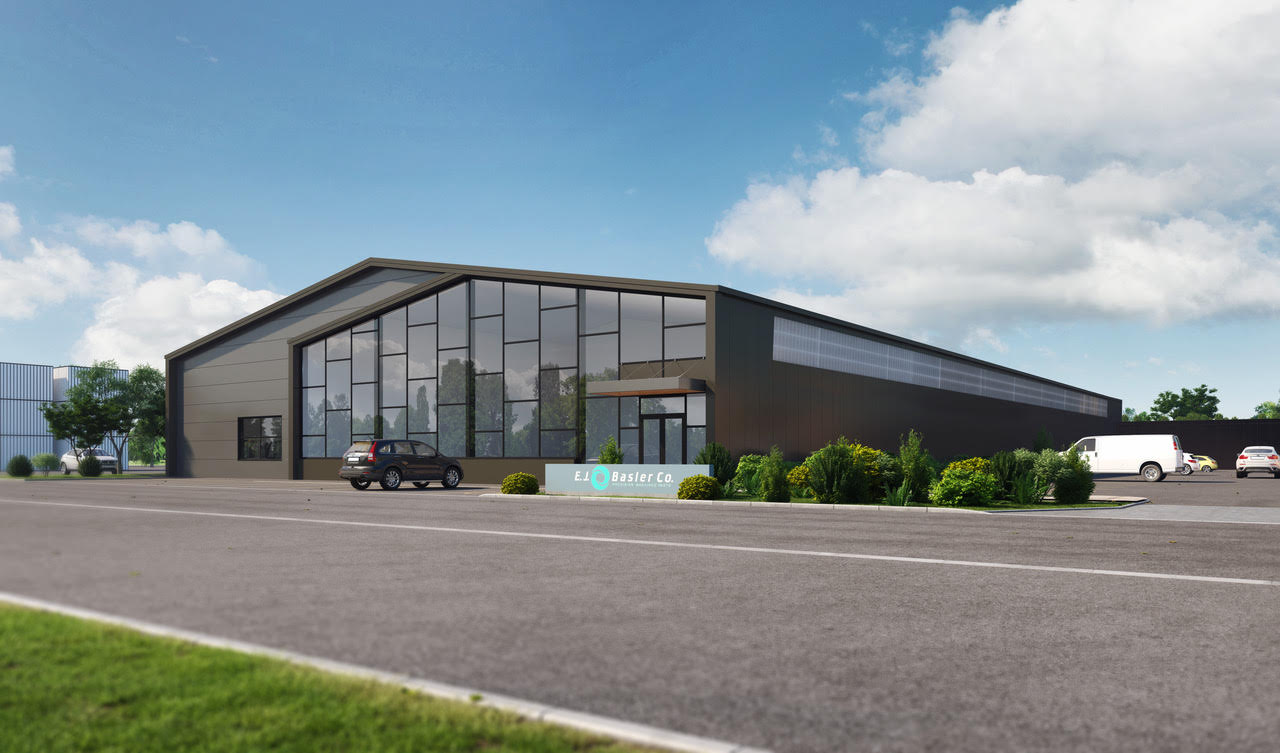
A standout example comes from EcoSteel’s prefabricated manufacturing facility in Schiller Park, IL. High-precision robotic systems—including fiber laser cutters, CNC panel lines, and robotic welders—were used to complete a 30,000-square-foot steel building for EJ Basler. Robotics enabled a seamless transition from BIM/CAD models to automated fabrication, reducing build time by over 25% and cutting dimensional errors to under 1 mm. Furthermore, material waste decreased by nearly 20%, and the client achieved a 15% cost reduction through faster cycles, lower labor needs, and minimal rework. The result was a high-performance facility delivered ahead of schedule with exceptional accuracy and energy efficiency.
6. The Future of Robotics in PEMB: What’s Next for EcoSteel?

EcoSteel is now exploring AI-enhanced design-to-fabrication workflows that integrate BIM, CAD, and machine learning. Moreover, these tools will optimize design configurations, improve material efficiency, and accelerate production. The company is monitoring emerging technologies such as 3D robotic steel printing. Which could enable on-demand fabrication of complex components. EcoSteel’s continued investment in R&D and strategic partnerships ensures that its systems remain at the forefront of sustainable, high-performance metal building innovation.
LEARN MORE – ADDITIONAL RESOURCES
Ready to future-proof your next building project? Contact EcoSteel today and experience the power of precision through robotics.
𝗦𝗵𝗮𝗽𝗶𝗻𝗴 𝘁𝗵𝗲 𝗙𝘂𝘁𝘂𝗿𝗲 𝗼𝗳 𝗦𝘁𝗲𝗲𝗹 𝗖𝗼𝗻𝘀𝘁𝗿𝘂𝗰𝘁𝗶𝗼𝗻 𝘄𝗶𝘁𝗵 𝗥𝗼𝗯𝗼𝘁𝗶𝗰𝘀
Robotics is transforming the steel construction industry by delivering faster production, higher precision, and more sustainable building solutions. As demand grows for efficient and environmentally responsible structures, automated technologies are becoming essential. however, from laser cutting and welding to panel processing and quality inspection, robotics ensures every steel component is produced with exceptional accuracy and minimal waste.
At EcoSteel, automation is not a trend—it’s a core strategy that enhances safety, reduces labor bottlenecks, and improves scalability across our Pre-Engineered Metal Building (PEMB) systems. By integrating smart robotics into every stage of fabrication, we create stronger, energy-efficient, and future-ready metal buildings. As the industry moves toward digital transformation, EcoSteel continues to lead by combining innovative design with advanced engineering precision.


WHY ECOSTEEL?
EcoSteel building systems come in a variety of shapes and sizes, but at their core they all utilize a custom engineered structural steel frame and a high-performance insulated shell. From sub-zero temperatures to dry heat or high humidity, Mother Nature continually tests the limits of building envelopes. While our insulated wall panels are a popular option, sometimes they are substituted or combined with masonry, stone, pre-cast or tilt-up concrete, wood, glass or other architectural wall treatments. The versatility and flexibility of our building systems allows for a myriad of colors, shapes, textures and designs. Today’s building projects require the perfect combination of energy efficiency, creative versatility, and reduced construction cost.







Contact Ecosteel for Your Project
Ecosteel is the top choice nationwide for custom prefabricated steel design projects. With award-winning projects, forward-thinking designs, leading technologies, and a large network of factories, contact our team to learn more about how we can bring your next project to life.